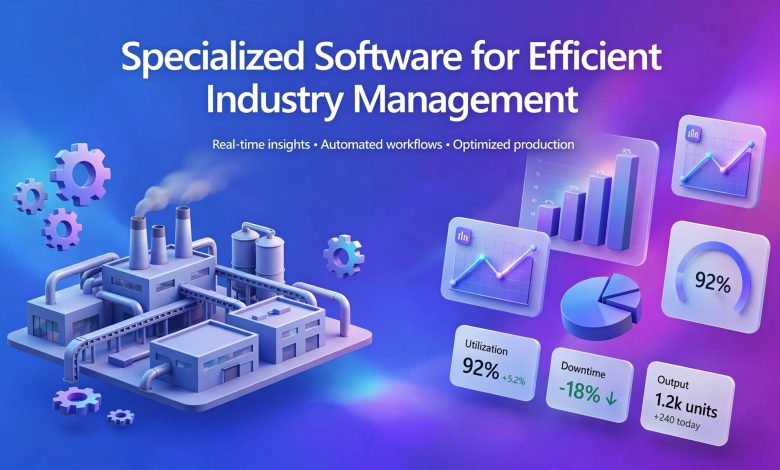
Within many sectors, specialist software is commonly used to assist in streamlining a company’s processes. Manufacturing, healthcare, finance, construction, transport and retail all utilise digital software in order to optimise their business. Specialist digital software is customised to cater for the needs of a particular industry. It can automate processes to further boost a company’s productivity. Businesses can then concentrate on more crucial areas. Effectively utilising specialist software can also facilitate strong decision making.
Streamlining Processes
Businesses can utilise specialist software to streamline their processes. Digital software can be used for time-keeping, task allocation and to both observe and store key information. Processes can then be automated so that staff are freed up to focus on more significant areas of work. Efficient organisation can also cut down on business processing times, therefore boosting productivity.
Managing Information
All industries produce much information which must be both stored and effectively managed. Specialist software can be used to store and manage customer, financial, stock and business related data. Staff can then simply locate key information without having to manually sift through numerous physical documents. Good information management will also facilitate collaboration within different parts of a company.
Managing Finance
Businesses can use specialist financial software to analyse revenue, expenditure and budgets. Furthermore, financial software can itself automate financial processes and compile reports to inform business strategy. Having clear financial data can help highlight areas where a firm may be overspending. Specialist finance software can also enable firms to further effectively manage their finances and assets.
Managing Stock and Supply Chains
Stock and supply chain software is used by companies to manage product, material, stock and supplier information. Alerts can be sent to a company when stock is running low. Companies can then order new stock in line with consumer demand. Supply chain software can also assist in communication between a company’s suppliers, warehouse and distribution channels. This can therefore limit wastage and avoid under-supply and enhance business process efficiency.

Boosting Staff Productivity
Staff can benefit from specialist digital software that can further ease processes and facilitate inter-personal communication. Staff can utilise project management software to allocate work, monitor due dates, share data and review development. Furthermore, there are industry specific training programmes which can be used to boost staff knowledge and skills. Where staff have access to relevant digital software, they can then perform tasks in a more effective and precise manner.
Managing Customers
Businesses can use customer relationship software to collate and analyse customer data and to oversee sales. Companies can ascertain what is appealing to customers, deal with queries and further refine the level of service provided. Digital software can also automatically send out communications and notifications, to further sustain customer connections. Efficiently managing customers can increase customer satisfaction and promote ongoing patronage, thus helping to drive business development.
Ensuring Information Security
Across all current industries, it is key for firms to securely manage and store data. Software can contain various security functions including password protection, data scrambling and verification and auditing procedures. This can limit unauthorised data access and ensure sensitive data is adequately safeguarded. Moreover, alongside using secure software, companies should routinely back up data, continually update their digital systems and educate staff on how to detect cyber security risks.
Informing Decision Making
Many business management digital systems provide analysis and reporting functionality which can be used by company leaders to analyse business performance. Business dashboards can illustrate data concerning productivity, expenditure, sales and project development. Analysis of such data can then highlight areas for development within a company. Making business decisions based on data can also lower uncertainty and further underpin high quality strategic planning.
Promoting Innovation and Development
New technology is still constantly opening up fresh avenues for improved business management. Innovations such as cloud computing, artificial intelligence, automation and advanced analysis are further enhancing the functionality of digital software. Companies can implement relevant innovations to further develop their production, to cut costs and to meet consumer demand. Companies can also scale their business and grow by implementing adaptable digital software, without needing to completely replace their digital system.
Conclusion
Specialist digital software is key for boosting efficiency and precision within today’s industries. Its benefits can be seen within areas such as finance, stock, customer care, information security and data analysis – all of which can be further simplified using digital software. Companies can further optimise business processes and foster development by utilising digital software that is appropriate for their business.

Correctly implementing and regularly updating digital software can therefore help to further enhance a company’s performance and equip it for upcoming industry issues.
Thanks