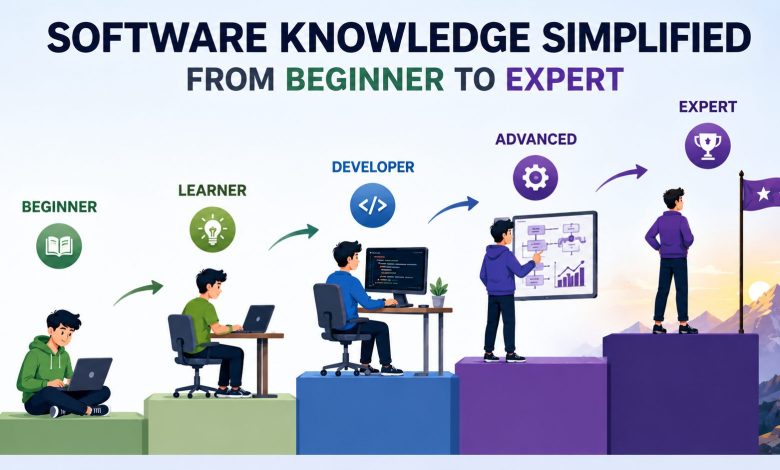
Yes, taking the leap into something totally unfamiliar, let’s say a new language or some brand-spankin’ new software, can seem intimidating. After all, isn’t that the scary part – you dip your toe into a new pool of knowledge and before you know it, you’re already lapped by those a little further ahead of the pack? Don’t worry; it is possible to navigate even what appears to be a bottomless pit of unknowns.
This is our ultimate guide to go from absolute newbie to bonafide software guru.
Go back to the basics not the shortcuts
The temptation to jump right in, building an epic, world-changing project with the latest slick tech tools, may be overwhelming. Stop. Slow down. Even when you’re ready to jump into the deep end, it’s still wise to pause.
Before diving head-first into the cutting-edge technologies, ensure you have a grasp of the foundational concepts, principles, and core building blocks, also known as the rudiments of computer science, logic, types, and syntax – in short, the very soul of software development.
Skip over these fundamental ideas now, and you risk building a career based on a shaky and riddled structure of incomplete knowledge.
Practice the basics on smaller real world applications
Instead of spending all of your time watching tutorials or pouring through articles on various tech publications that detail a new technology or software development framework, attempt to apply that information immediately. Working on a smaller, but tangible and real-world application-think of the creation of a calculator or to-do list, or even slightly more elaborate and well-within beginner parameters-will help cement your understanding far more thoroughly.
Focusing but remaining broad
Throughout your career as a software developer, you’ll discover your passions begin to align with a particular facet of software development-it might be back-end, front-end, data management, for example. You’ll end up diving deep into your chosen specialization and become a true expert, yet it is absolutely vital to maintain broad awareness of the wider software development ecosystem and its interconnected components. It’s OK to make fundamental errors, even beginners get this wrong.

Get comfortable with your documentation and errors
Many times, the difference between a junior developer and a senior expert lies in their understanding of how to read the technical documentation and troubleshoot error messages effectively.
As a beginner programmer, when you hit an error message you’ll likely find yourself panicking and immediately reaching out for help to a colleague, while senior software engineers look to these error messages as guides-pieces of a larger puzzle to decipher.
Ask yourself why not just how
While the skill of being able to perform a certain function with a given piece of technology is important, an equally or more significant level of understanding entails knowing why things work the way they do. This refers to understanding the design and architectural principles underlying a particular system or technology and its overall context. – This can be within the context of a company or a team dedicated to the maintenance and development of open source software.
Teach others your knowledge
The absolute best way to solidify your knowledge and understanding of a new concept or technology is to teach it to someone else. In teaching someone else you have to pull all of your knowledge together and articulate the information in such a way that it becomes digestible.
You’ll soon find that you’re uncovering blind spots in your own understanding and in doing so identifying areas in which you need to do additional study.
You will learn to adapt and evolve
Software is an area of study that is continually expanding and introducing new language standards, new paradigms and new frameworks.

As long as you remain open minded and prepared to adapt to these changes and continue to evolve, the industry will present no significant challenge to you whatsoever.
Thanks