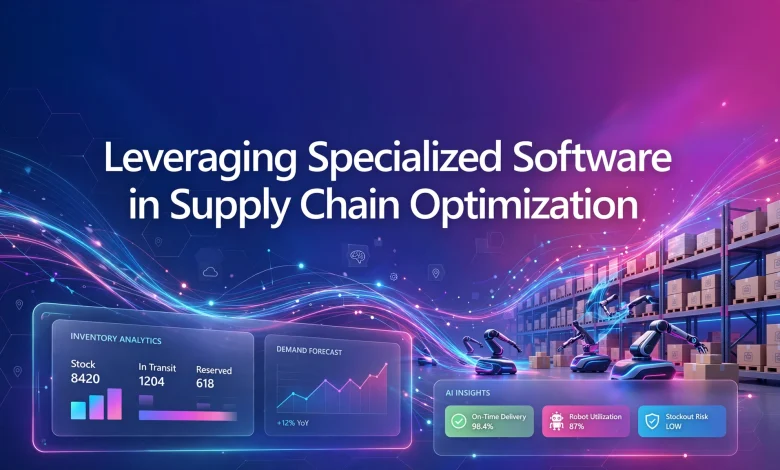
Leveraging Specialized Software in Supply Chain Optimization
Specialized Software

Modern distribution chains consist of numerous complex work areas, from purchasing to manufacturing, processing, warehouse, transport, inventory management, and delivery to the final customer. Managing such a chain manually becomes a hard task for enterprises. Specialized software is an optimal solution that allows controlling and tracking all processes, analyzing and evaluating information, minimizing delays, and optimizing the supply chain. The current paper will discuss the key benefits of specialized software for supply chain management.
Enhanced Visibility
Specialized software allows a company to maintain a high level of transparency and visibility over its operations. With advanced inventory management, warehouses, and distribution centers, the flow of goods becomes predictable and minimizable in disruptions. It becomes possible to quickly response to orders, track all suppliers and shipments, and minimize problems in the supply chain.
Inventory Management
Managing a company’s inventory is crucial for any business. This software assists enterprises in maintaining the right amount of goods and the proper timing for their purchase. With the inventory management system, it becomes possible to avoid extra storage costs and shortages of goods and materials at the same time. In addition, specialized software allows setting up alerts to remind or notify managers when the inventory needs to be ordered or restocked.
Demand Forecasting
A demand forecasting tool uses historical data and the company’s information to predict demand. High forecast accuracy helps the company avoid overstocking due to overestimated demand. At the same time, with greater accuracy, the company will not find itself in the situation of insufficient goods to meet consumer demands. This software component is vital for companies involved in the production of goods since it allows estimating the required volumes of materials for production.
Transportation Management
Specialized software assists companies in tracking and controlling shipments, choosing carriers, routing, and transportation cost management. Finding the shortest and least expensive route saves both time and money. In addition, when the carrier is selected and the shipment is tracked in real-time, customers have greater visibility and can follow the location of their goods. These factors are significant for companies since the transportation chain is often unpredictable and challenging.
Supplier Management
For most companies, suppliers play an essential role in the supply chain. With the supplier management system, a company can collect and store data on each supplier, receive and process purchase orders, track performance, and evaluate work quality. Using the capabilities of supplier management, it becomes possible to quickly identify problems with a particular supplier and find an alternative one. At the same time, companies can easily analyze which suppliers have performed successfully over a specific period.

Automation of Routine Processes
One of the main benefits of software in general is the reduction of the number of daily operations performed manually. With the automation of routine processes, companies save time and effort. In particular, software systems can independently process purchase orders, update inventory records, and send and receive information. This approach also significantly reduces the risks of errors associated with human factors.
Real-Time Information
Access to real-time data is essential for companies that want to remain competitive and efficient. Software provides up-to-date and timely information that can affect the decision-making process. For example, a company can quickly respond to an order, react to changes in the supplier situation, or quickly resolve issues with product shortages.
Lower Costs
One of the primary advantages of specialized software is the significant reduction in costs. With accurate inventory management, companies minimize the risk of overstocking and, consequently, reduce storage costs. At the same time, the software helps find the shortest and least expensive route, thus saving on transportation costs. Finally, the software reduces labor costs, since fewer routine tasks need to be completed by employees. These factors together contribute to the overall reduction in costs and, as a result, higher profit.
Higher Customer Satisfaction
Customers want timely order fulfillment without delays. The software helps the company avoid stockouts and ensures that the ordered goods are available. In addition, the software helps to provide the customers with shipment tracking information, thereby offering a higher level of service quality. As a result, the company’s image as a reliable and quality supplier is improved, and the customer base is expanded.
Better Decision Making
A competent choice of the methods and strategies for supply chain management is the key to its effectiveness. Software systems help analyze a large amount of data in real-time, visualize it in reports and graphs, draw conclusions, and make decisions. Using this information, companies can identify the weakest points in the supply chain and look for more cost-effective and reliable suppliers.
Therefore, such software is especially helpful for making the right decisions in a timely manner.
Thanks