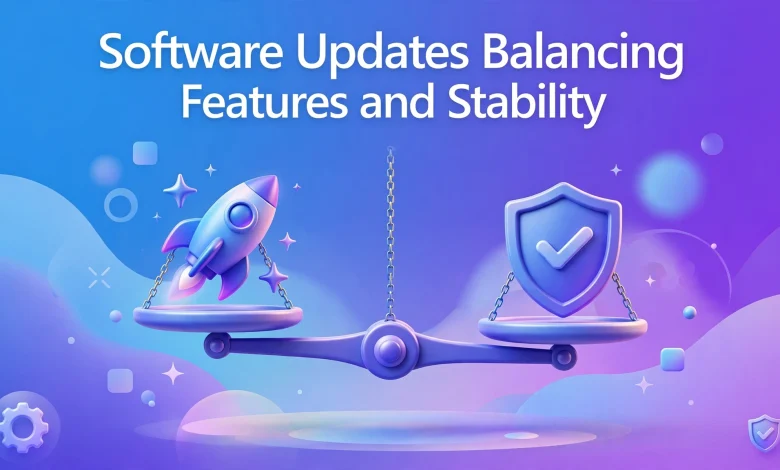
Software updates are an integral part of modern technology. Developers strive to enhance applications by adding new functions and features. However, too many modifications may lead to negative consequences. Thus, the key principle of successful development is finding a balance between innovation and stability as user-friendly programs with increased functionality may experience issues attracting new customers and retaining old ones.
The Necessity of Software Updates
Software products require updates to maintain their stability, security, and functionality. Developers release modifications to address discovered bugs and issues and provide an enhanced experience. In addition, they also introduce new elements and functions to keep the application relevant. Finally, the updates allow developers to expand the functionality and take advantage of modern technologies, ensuring that programs work properly on new devices.
Introducing New Functionality
New functions and features are vital in modern applications as they help address users’ demands. Developers may add multiple elements such as advanced search, personalization tools, and other utilities. Nevertheless, the more functions are introduced, the more code has to be maintained. Thus, prior to launching an update, developers should assess its impact on an application to avoid serious issues.
Stability the Foundation of Experience
Applications should offer a stable experience as users interact with the product daily. At the same time, the updates may introduce serious issues, which results in a negative experience. A stable build of an application does not guarantee the absence of problems but helps eliminate the majority of error causes, ensuring smooth performance.
Resolving Discovered Bugs
Addressing the technical issues that appear in an application is one of the critical tasks of software updates. Developers analyze the problems reported by users and testers and eliminate them in the newest build. Some of the issues may be insignificant, while others may impact the core functionality. Therefore, if critical bugs were discovered in an application, they should be resolved on priority.

Security Updates
One of the central aspects of software products is the protection they offer. Developers release security updates to ensure that applications are resistant to potential threats. The tools used to identify flaws are constantly evolving, meaning that vulnerabilities may be discovered frequently. Even though the security-related updates may not offer new functions and utilities, they are essential for keeping software up-to-date and protecting it from potential threats.
The Role of Testing
The wider the coverage of testing, the fewer issues an update may have after its release. Developers should conduct various tests to spot potential problems and ensure that the suggested modifications align with the current build. The test suite may include individual tests, performance assessments, cross-platform trials, and other elements. In addition, the software may also be stress-tested to ensure that it is capable of handling high traffic volumes and a high number of requests.
Phased Launches
In some cases, developers launch updates for a small group of users first to gather feedback and ensure that they do not cause serious issues. Therefore, the modifications are only distributed to the wider audience if no critical errors were discovered. The approach allows the developers to find show-stopping issues and eliminate them before rolling out the update to all users.
User Feedback
End-users play a crucial role in the development of new software products as they test the application and report issues. Thus, the feedback provided by the users is vital for the developers as it offers them insight into what can be improved in their product. Reportedly, the modifications that do not resonate with the target audience may cause more harm than good even if no technical issues are detected.
Avoiding Superficial Updates
Sometimes, developers attempt to update the software too frequently, which may result in numerous superficial modifications that do not offer any significant improvements. Thus, the developers should focus on delivering substantial changes introducing new features or addressing serious issues or even reworking the fundamental elements of an application. In addition, the more functions are added, the more code has to be maintained, which may lead to additional errors.
The Balance Between Innovation and Stability
An update may offer new functions and unique features that users enjoy, but it should not compromise the core stability of an application. Thus, prior to releasing modifications, developers should review proposed improvements, conduct numerous tests, and ensure that no additional issues can be triggered. Considering the needs of the target audience, the current technical level of an application, and its security concept,

the developers can find the right balance and update the software without causing serious issues.
Thanks