Automated Software Troubleshooting Trends and Tools
Software Troubleshooting

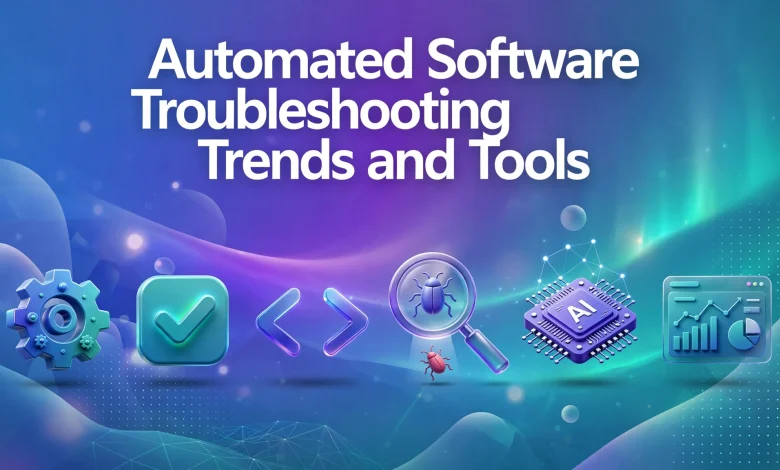
Software problems are an inevitable part of all our digital interactions. Programs freeze, update incorrectly, or lose connection to databases or networks. IT administrators used to manually troubleshoot issues, but the new trend is to shift towards software troubleshooting automation. The use of AI, scripts, tools, monitoring, and other utilities will simplify and speed up the troubleshooting process.
AI-Powered Troubleshooting
Artificial intelligence is becoming a major tool to research and troubleshoot software issues. Using machine learning algorithms, businesses can identify patterns and correlations in error messages, system performance, and application usage.
A company’s internal IT administrator or an external technical support agency can utilize AI to streamline error detection and resolution and dramatically reduce time spent investigating issues.
From Reactive to Predictive
One of the common threads in IT technical support outsourcing companies is reactive support that begins when an incident occurs. A more modern approach involves shifting towards predictive problem-solving that detects and prevents potential issues that could arise.
Modern monitoring tools allow administrators and outsourced help desk support teams to ensure that servers, applications, and other elements function correctly. By analyzing the patterns of system performance, AI-powered analytics can identify irregularities and alert human administrators who can take necessary action.
Monitoring and Logs
Logs record all pertinent details regarding the software environment in either an organization or a single application. Analyzing error logs to determine the root cause is often time-consuming, tedious, and challenging.
Logging errors during program execution, system malfunctions, and other incidents become a centralized repository of data for the administrative personnel. The process can be automated by log analysis to filter the critical logs and help troubleshoot problems faster.
Self-Healing Systems
Systems can be designed in a manner that allows them to repair themselves once an issue is identified. Self-healing mechanisms can be as simple as restarting malfunctioning services on servers and applications running on personal computers.
In more complex scenarios, an administrator or an IT help desk technical support agency can utilize automated log analysis and predictive power of AI tools to diagnose issues and recommend human intervention without shutting down entire operations.
Diagnostics
Automated diagnostics tools can run software tests that allow the help desk agency to determine the root cause of the error. It can look at network connectivity or utilization, storage capacity, application-specific problems, or system-wide irregularities.
Automation simplifies diagnostics because scripts or AI tools can independently execute and detect typical issues such as connectivity or authorization errors. Software diagnostics are helpful and often employed by help desk support teams that receive a ticket and complete the diagnostic process before handing it over to the first-level technician.
Remote Troubleshooting
Many businesses are adopting remote work policies for software development. Technical support help desks can be located in a different city or country. Remote troubleshooting becomes a necessary part of delivering IT support to business clients.
Remote server and application monitoring and administration require remote technical support, including some aspects where IT help desk technical support agencies can make changes to servers.
Scripts
Scripts can be utilized to complete many routine troubleshooting functions. IT administrators can create basic scripts to delete cookies or temporary files, reboot programs or servers, read and write system values, and check system performance.
Automation becomes handy when the process involves repetitive tasks, therefore maximizing accuracy and reducing human error, which makes scripts a helpful troubleshooting utility.
The Future of Automated Troubleshooting
The future of software troubleshooting will involve combining the power of AI, automation, and human expertise. AI algorithms could provide a more comprehensive analysis of existing problems by associating them with historical data, thereby recommending solutions.
Although automation is the future, not all aspects of troubleshooting can be delegated to AI models. Proper authorization, auditing, logging, and monitoring of critical systems are vital to ensure uninterrupted operations, therefore minimizing the risk of causing new issues.
Conclusion
Automated software troubleshooting will define the future of technical support. Companies can utilize tools, scripts, machine learning, and monitoring to detect and resolve problems faster than ever. At least some elements of a technical support outsourced agency will always involve humans to ensure accuracy and prevent system downtime. Therefore, automation in troubleshooting processes should be implemented carefully.

The best strategy for most organizations is to find ways for AI to provide accurate analysis and reduce the time spent by human administrators on recurring issues, allowing them to be more productive.
Thanks