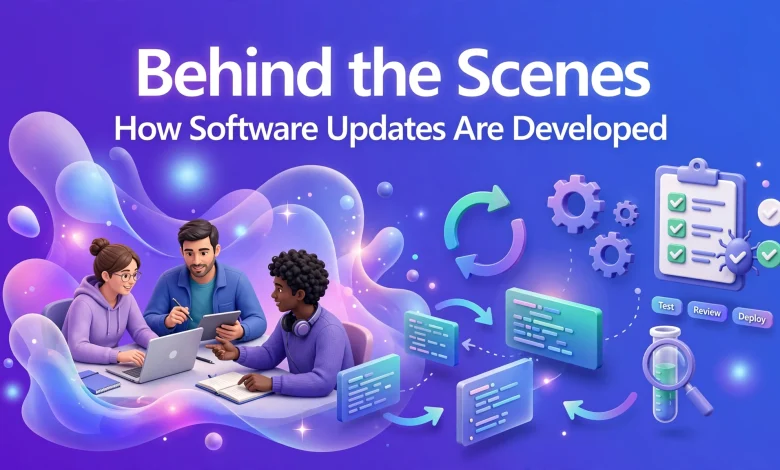
Software updates are not as simple as they seem. Although for an end-user, it is just a pop-up window informing them of the upcoming update and offering to install the new version, the development team has a lot to do to prepare the update. Software updates are primarily made to improve functionality and fix software bugs and security issues; sometimes, they also contain new features.
Reasons for Software Update
Any software development is in constant search of ways to improve the product; thus, there may be various reasons why the software update was needed. Software updates can be initiated by developers due to various factors, such as customer requests, found bugs and errors, software security issues, the need for improvement, or any other reasons.
Planning of the New Features and Enhancements
Before actually starting coding and making changes to the software, the development team has to plan what the software update is going to contain. Typically, there is a planning meeting where all ideas are discussed and debated, and the developers answer the question of “How will the update work?” and “How long will it take to implement this or that feature?”. Depending on the content of the software update, the developers and stakeholders have to discuss and prioritize features and technical requirements to proceed to the next stage.
Programming the Update
The actual coding and making changes to the software fall under this stage. Developers do the hard work and update and improve existing features and functions, fix bugs, and optimize code. Moreover, the developers test their changes to the software in isolation before actually committing them.
Correcting the Bugs Identified
The bugs found are the primary reason for any software update. During this stage, the developers fix all the reported bugs and issues; typically, they also find some bugs while trying to fix the existing ones.
Enhancing Security Features
Software updates can also contain various security improvements if the technical support or developers find any vulnerabilities. This stage is connected primarily with discussing and actually implementing the necessary security enhancements and improvements. The developers research new security threats and possible software security issues and then work on finding the best way to actually fix them.

Testing Procedures
Testing procedures are a part of most of the abovementioned stages. The software testing process is rather complicated; however, its primary function is to ensure that everything works properly. Software testing generally includes regression tests, which verify that all existing functions work properly in every environment, as well as component tests, which assess the functionality and other characteristics of a certain component or the software in general.
Assessing Update’s Compatibility with the Different Environments
The software is generally designed for a specific environment; however, it can also work in other similar environments. Thus, during this stage, the developers check how the software works in different systems, environments, and configurations, such as the operating system, plug-ins, databases, hardware, browsers, and other software.
Getting Public Feedback in Beta Version
Sometimes, especially if the software update requires it, the company can release the beta version of the software to the public for testing. This way, the developers can catch more bugs and issues as the people actually use the software. Testing the software with the audience can be helpful especially when the developers do not have much experience with the product, as they only test it with the testing team.
Software Update Release/Distribution
When the software is fully tested, it is time to release the update. The software is then distributed to the end-users through the dedicated software source. It is noteworthy that not all the updates are released at once; rather, they are distributed over time with large-scale organizations typically having release windows. The abovementioned tactic allows engineers to roll back the changes if something goes wrong.
Post release Software Updates
The software update cycle does not end with the release; rather, it continues as engineers observe how the software behaves in the wild. The updates after release are made to address various issues, ranging from security concerns to new bugs; sometimes, the customer support receives feedback, which has to be addressed. To sum up,

software updates can also come as hotfixes to address critical software issues.
Thanks